
The appeal of Quiet Luxury: why choose useful handcrafted ceramic favors
Once, the success of a reception was measured by the weight and extravagance of silver or crystal trinkets piling up in living room display cabinets; today, contemporary taste prefers subtraction, authentic materials, and objects that can live every day in guests’ homes. In this evolution of taste, couples look for details that combine refined aesthetics with real everyday use. Choosing useful handcrafted ceramic favors means exactly this: turning your thanks to your loved ones into a piece of everyday art that evokes emotion with every use without ever feeling cumbersome.
The Quiet Luxury philosophy and the Cloud Dancer palette
The world of weddings and grand ceremonies is embracing a whispered philosophy, commonly known as Quiet Luxury (understated luxury). This trend moves away from the cold optical whites typical of industrial production to embrace warm, enveloping and deeply textured tones. The star color of this season is Cloud Dancer (Pantone 11-4201), a soft, milky white with an imperceptible hint of gray that gives it extraordinary visual depth.
In palettes for events that seek warmth, this shade acts as the perfect breathing space. It pairs beautifully with intense tones like burgundy, terracotta, wine and forest green, creating sophisticated, elegant contrasts. In our workshop in Naples, we use ceramic glazes formulated to reproduce this exact silky, matte feel, offering a perfect base on which traditional hand-painted decorations stand out with timeless grace.
The revolution of useful handcrafted ceramic favors: designer moka pots and oil cruets
The real novelty lies in rejecting the knickknack for its own sake. Couples today want to give something that speaks of conviviality, slow gestures and Italian living. That is why the most sought-after objects have become the moka-shaped sugar bowl and the majolica oil cruet. However, to avoid the standardized look of imported industrial products, the artisan’s touch makes all the difference.
A moka sugar bowl or an oil cruet made entirely by hand in Neapolitan majolica or Capodimonte ceramic is not a simple utensil but a functional sculpture. The oil cruet evokes the ritual of good olive oil at the table, while the moka recalls the ritual of Neapolitan coffee, a sacred moment of welcome. Giving a favor like this means offering a sensory experience, a design object that guests will use every morning with a smile.
Artistic inspirations: one-of-a-kind creations for unforgettable details
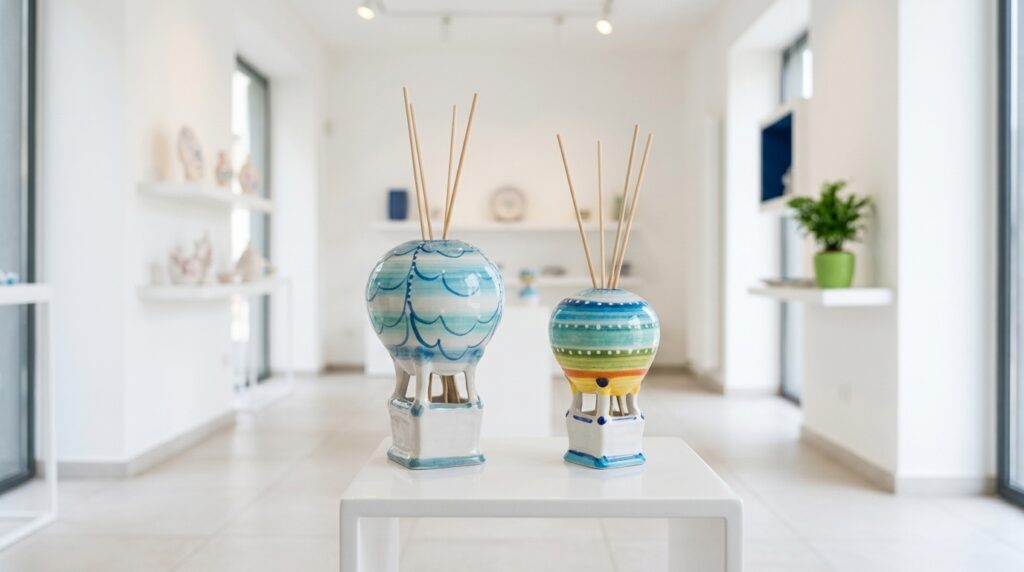
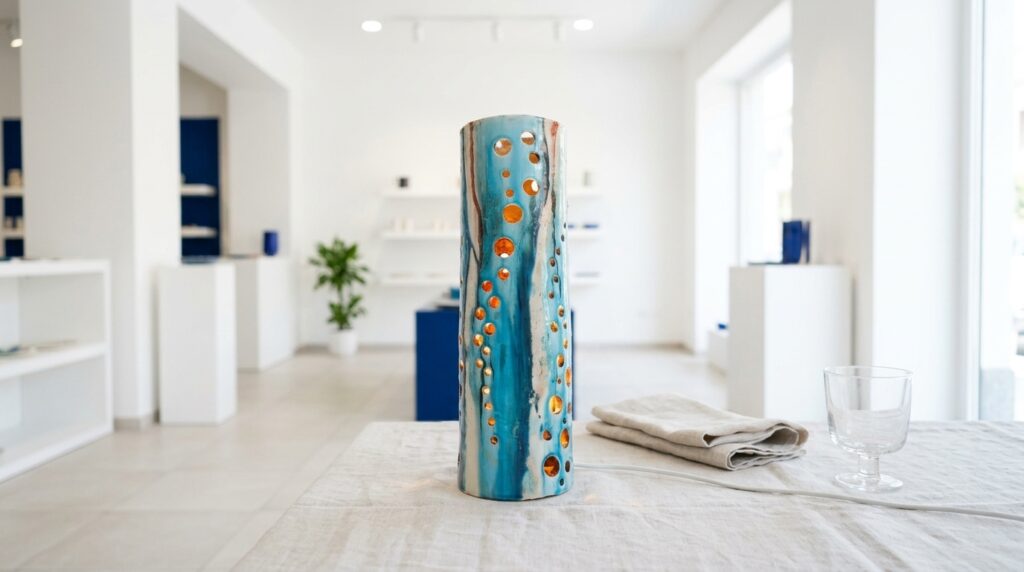
Alongside oil cruets and moka pots, the Quiet Luxury trend is expressed through small ceramic masterpieces that guests can keep and showcase in their homes. Each creation must be able to tell a story of care and dedication.
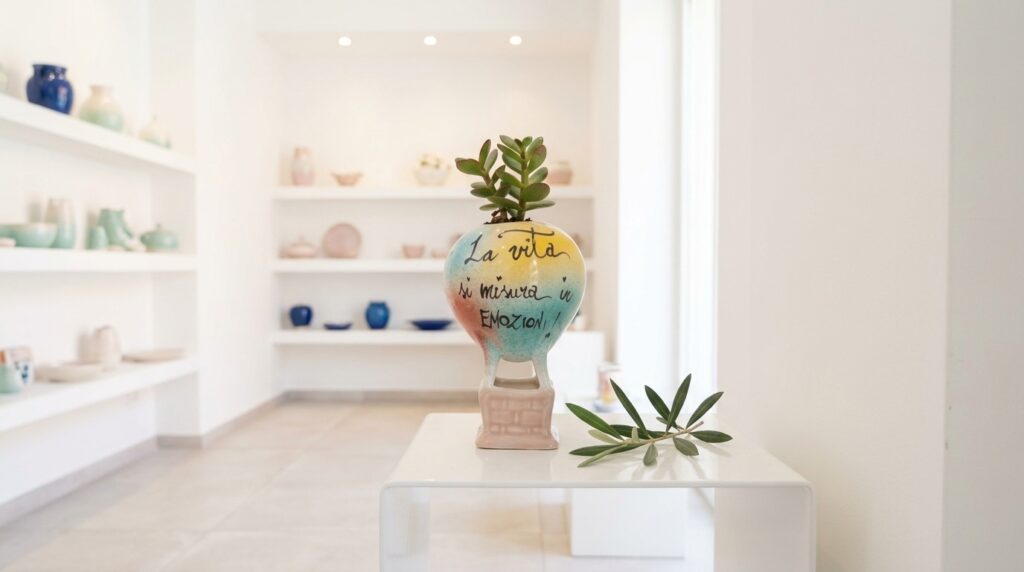
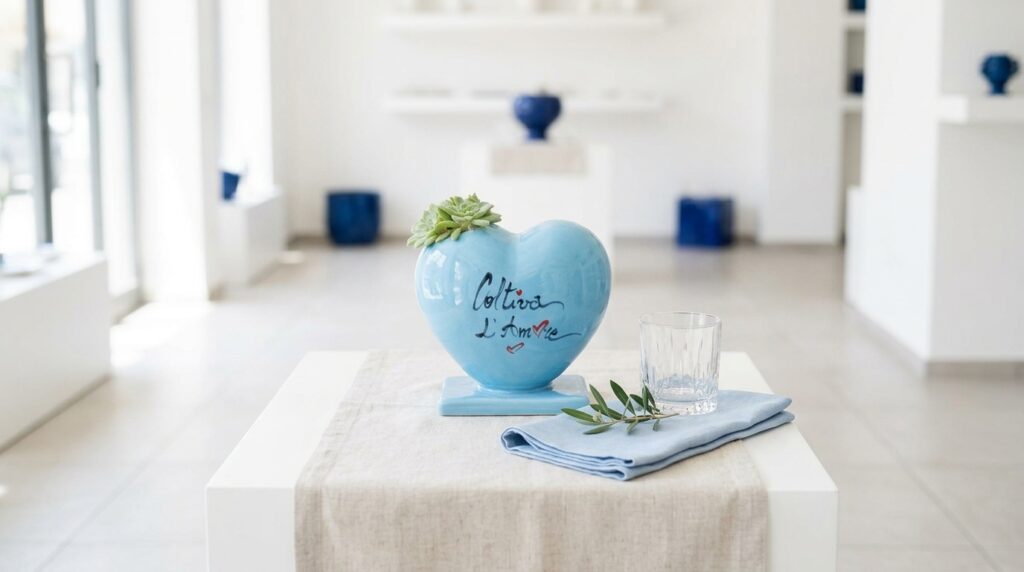
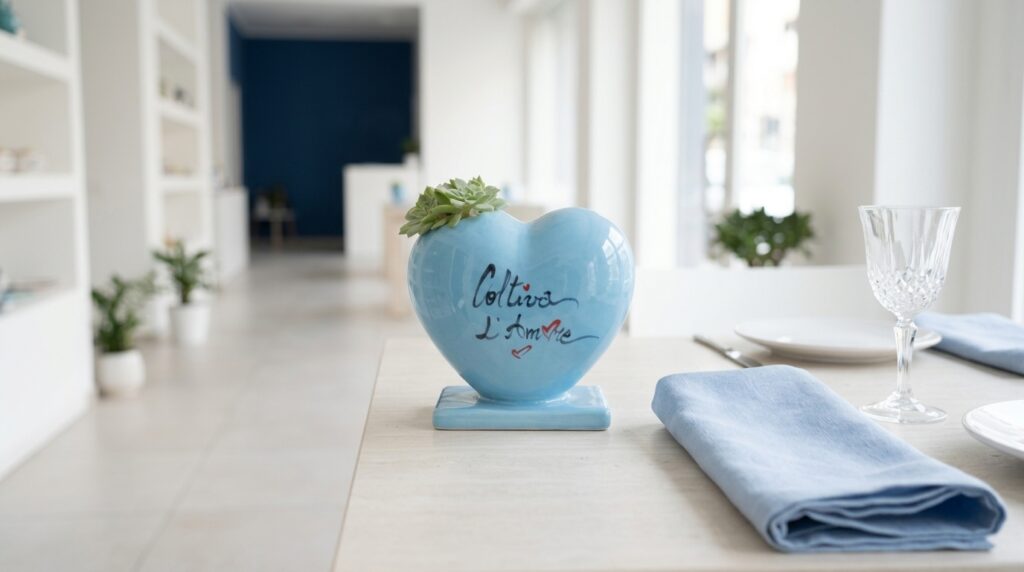
- Greenery and nature at home: For those who want to combine the idea of rebirth with usefulness, the Coltiva l'Amore ceramic heart planter is a poetic, versatile choice. Available in light blue, pink, green and yellow, this planter is perfect for small succulents or herbs, bringing a message of sincere affection to the guests’ table.
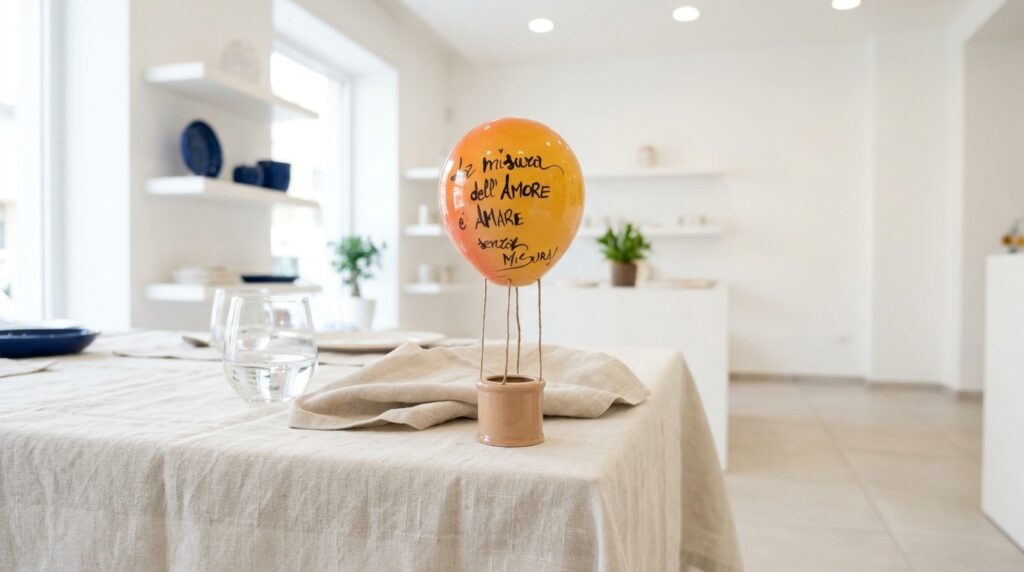
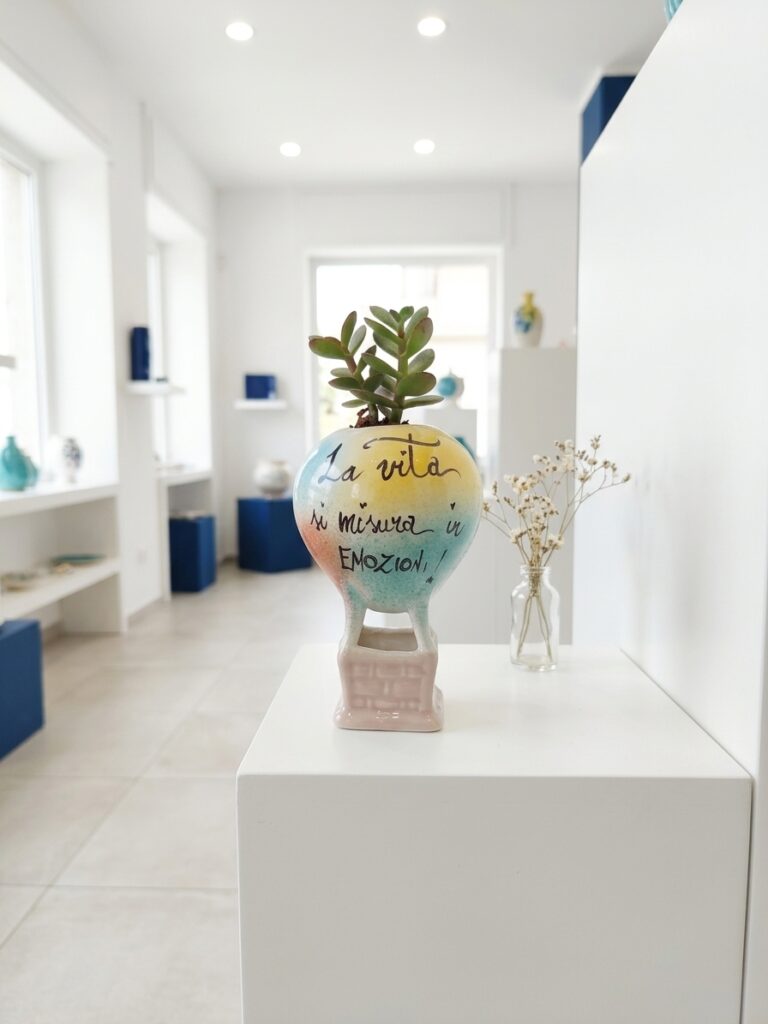
- The journey as a metaphor: If you are looking for a gift with strong symbolic value for the witnesses or your closest guests, the ceramic hot air balloon with a motivational phrase is an excellent option. Measuring 15x8x8 cm and with a delicate palette ranging from yellow to turquoise and beige, it discreetly decorates the most cherished corners of the home, a reminder of how important it is to let emotions guide the way.
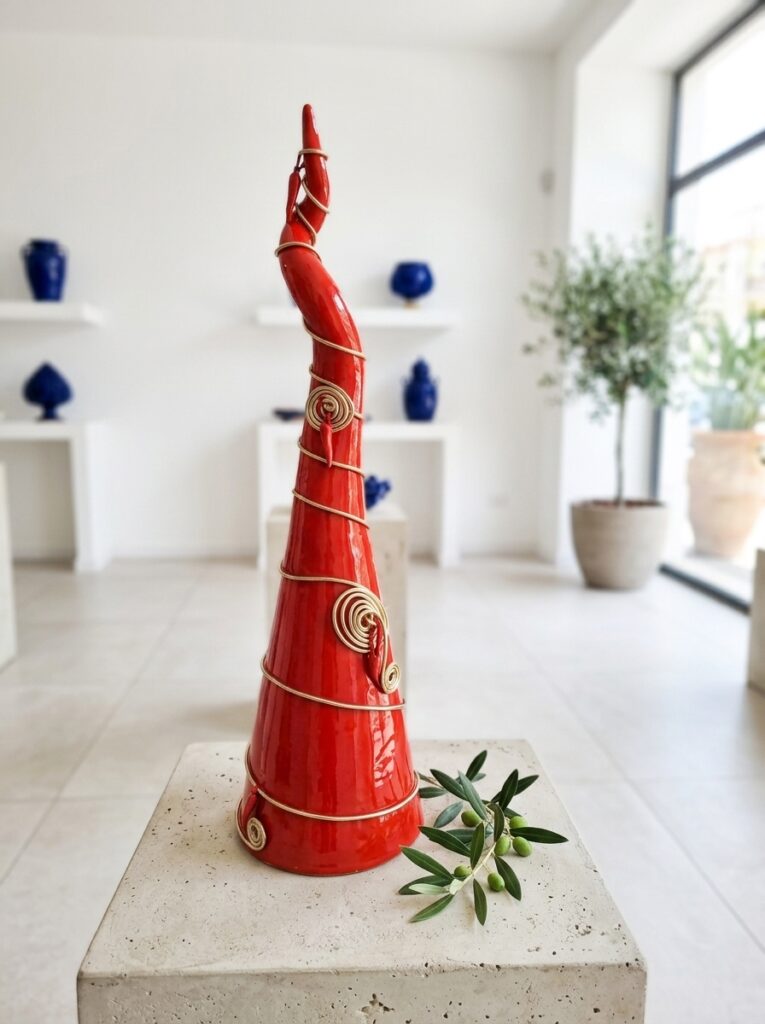
- A touch of tradition revisited: For those who don’t want to give up Neapolitan good-luck tradition but want a contemporary look, the copper swirl horn combines the strength of the symbol with a sinuous, modern line. It is an elegant decor object that moves away from clichés to become a true design creation to display.
Textured, tailored packaging
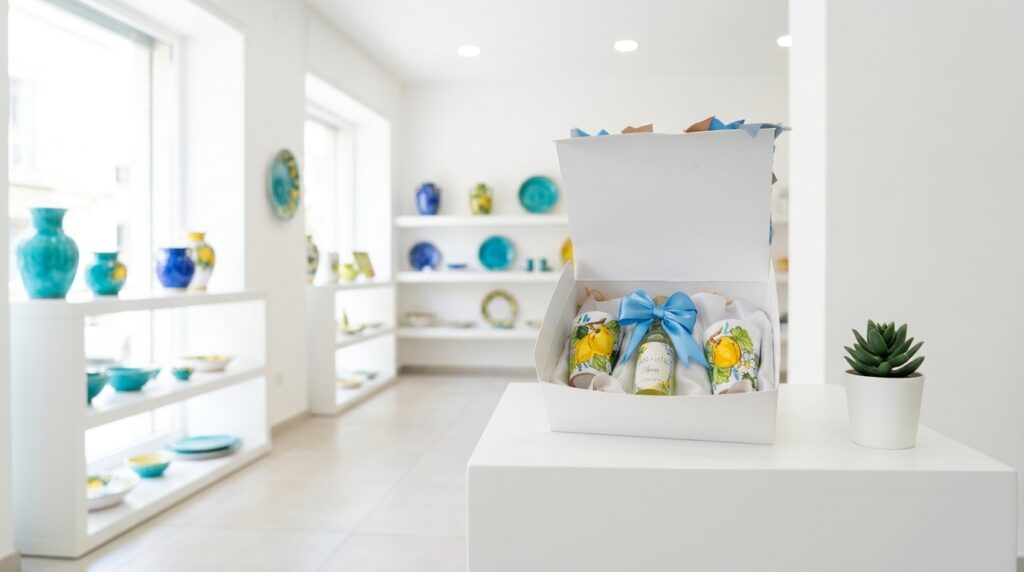
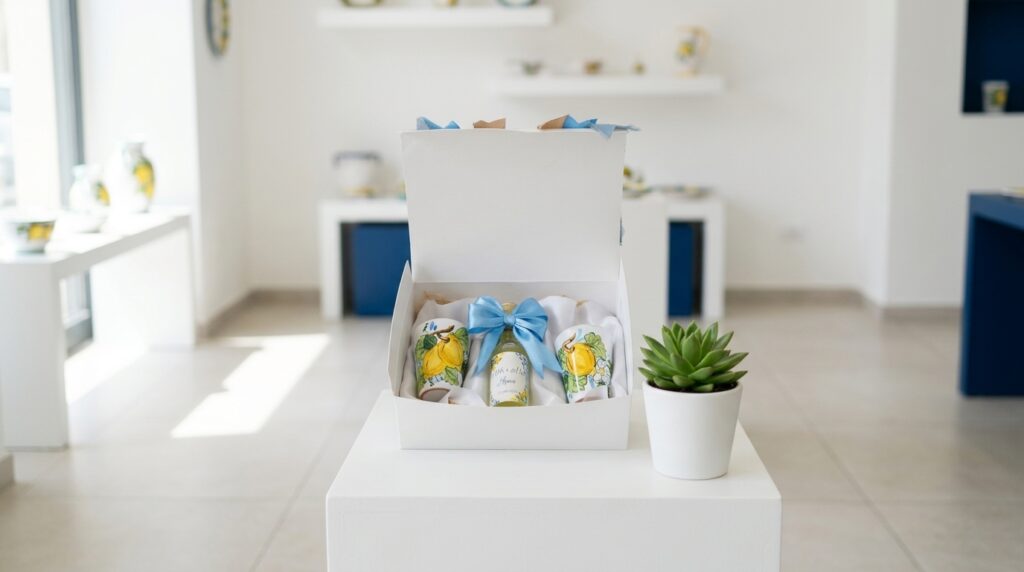
In perfect harmony with Quiet Luxury, packaging also leaves behind plastic boxes, glossy cardboard and synthetic ribbons. The trending packaging for useful handcrafted ceramic favors becomes tactile and natural. The pouches are made of raw linen or organic cotton, strictly in the warm Cloud Dancer shade.
Details are pared down to the essentials: no flashy gold lettering, but discreet personalization, such as just the couple’s initials embroidered in thread or printed with eco-friendly water-based inks. This tailored approach enhances the intrinsic beauty of the ceramic inside, preparing guests to discover a gift made with heart and hands.
Neapolitan craftsmanship as a choice of value
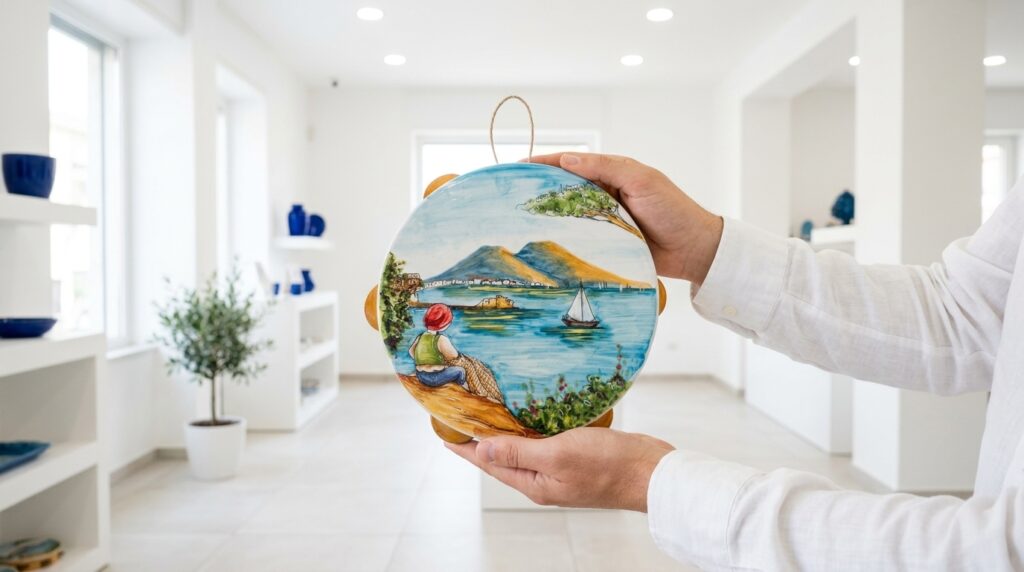
Choosing a handcrafted workshop for your favors means taking an active part in creating your event. Every creation that comes out of our kiln in Naples carries the small imperfections that bear witness to hand shaping and brush-applied color. No two creations are identical, and it is precisely this uniqueness that defines true luxury today.
Whether it is an intimate wedding in a village or a grand fall celebration, hand-painted ceramics offer a versatility and warmth that no industrial object can ever replicate.
If you are planning your wedding or a special event and want to delight your guests with a gift that combines usefulness, design and tradition, we invite you to discover our collections. Contact our workshop for a personalized consultation or visit the shop to find the perfect inspiration for your most beautiful day.